BEng Microelectronics Engineering
1703A
Local Places :
163 (For First Year and Advanced Standing I Entries)*
Non-Local Places
(All CityUHK programmes except Mainland Gaokao):
Around 500
B.Tech, M. Tech (E & ECE) I.I.T Kharagpur, M.S. (Math), Ph.D. (ECE) GaTech, SMIEEE
+852 3442 6077 (Phone)
+852 3442 0562 (Fax)
+852 3442 7971 (Phone)
+852 3442 0562 (Fax)
* for JUPAS and non-JUPAS admissions
We live in an increasingly connected and smart world – the main driver for this growth is innovations in microelectronics engineering that produce high-performance and low-energy integrated circuits (IC) and sensing devices. ICs are found in every aspect of our daily lives starting from mobile phones and computers to automobiles and refrigerators. Many novel applications get enabled by ICs such as smart medical devices like pacemakers for the heart or deep brain stimulators for Parkinson’s disease or graphics processing units to drive a revolution in artificial intelligence research. If you are excited by these topics and want to learn about cutting-edge IC technologies, then you are at the right place!
The aim of the Microelectronics engineering major is to provide students with sound knowledge of the fundamental principles involved in the design and fabrication of integrated circuits (ICs), and a comprehensive understanding of electronics and information technologies. The curriculum includes application-specific IC (ASIC) design for novel applications, nanotechnologies for high-performance devices and microsystems, new designs and materials for ICs, wireless and optical communications, and embedded system design.
Upon completion of the major, students will be sufficiently prepared for employment in various sectors of the electronics industry, and well equipped with fundamental knowledge for pursuing postgraduate studies. In Hong Kong, companies headquartered in Hong Kong Science Park including Huawei, AMASIC, UMEC, REDISH, Infineon, and Solomon Systech have hired many engineers in different areas of microelectronics. There is also a huge demand for engineers skilled in all aspects of semiconductors in the Greater Bay Area as well as globally making this major very timely.
Entrance Requirements for Direct/Non-JUPAS Applicants
To be considered for admission, you must satisfy the General Entrance Requirements and have studied an engineering-related or a science-related discipline at a high school or post-secondary institution.
For details of the programme curriculum structure, please visit the ‘Undergraduate Catalogue’.
The aim of this major is to provide students with sound knowledge of the fundamental principles involved in the design and fabrication of integrated circuits (ICs), and a comprehensive understanding of electronics and information technologies. The curriculum includes application specific IC (ASIC) design for novel applications, nanotechnologies for high-performance devices and microsystems, new designs and materials for ICs, digital processor, system-on-chip, wireless and optical communications, and embedded system design. Upon completion of the major, students will be sufficiently prepared for employment in various sectors of the microelectronics and electronics industry, and well equipped with fundamental knowledge for pursuing postgraduate studies.
工學士(微電子工程學課程為學生提供有關集成電路(IC)設計和製造的基本原理,以及對電子和信息技術的全面理解。課程包括特定應用積體電路(ASIC) 設計、用於高性能設備和微系統的納米技術、用於IC的新設計和材料、數字電路處理器、單晶片系統、無線及光學通訊,以及嵌入式系統設計。完成專業後,學生將為微電子和電子行業各個領域的就業做好充分的準備,並具備攻讀研究生的基礎知識。
The first year of this major includes basic courses in mathematics, physics, electronics, and computing, with hands-on experience in electronics circuits and computer programming.
Core subjects include Engineering Mathematics, Computer Programming, Logic Circuit Design, Electronic Devices and Circuits, Microcomputer Systems, Semiconductor Materials and Devices, Applied Electromagnetics, Embedded System Design, Applied Optoelectronic Devices, VLSI Circuit Design, and Microsystems and Nanotechnology.
The technical electives in the final stage of the major cover specialized subject areas, such as integrated photonics, microelectronics manufacturing, real-time embedded systems, and advanced ICs.
The job opportunity for IC engineers will be strong and will be on a steady growth. Artificial intelligence and 5G technology promise to deliver some of the most exciting challenges on engineering opportunities since the past two decades. Sophisticated and versatile ICs have made commercialization of these technologies possible. The industries have experienced a strong demand on IC design/manufacturing engineers in recent years. But companies globally and locally in Hong Kong are struggling to find enough talent. Locally in Hong Kong, the talent shortfall stems from the severe shortage in training IC engineers in the undergraduate level.
In Hong Kong, companies headquartered in Hong Kong Science Park including Huawei, AMASIC, UMEC, REDISH, Infineon, and Solomon Systech are the major players of IC design and technology. They all together have hired over one thousand IC engineers focusing on different areas. Jobs and demands from these international players are increasing because of the strong global market and the technological hub in the Greater Bay area. Across the border in Shenzhen, there are also huge demand on well-trained IC engineers.
Placement Schemes
The Department collaborates with industry to provide real-world experience through:
- Professional Internship Programme (PIP): One-semester, two-semester, or one-year internships.
- Industrial Attachment Scheme (IAS): Local summer placements.
- Overseas Internship Scheme (OIS): International summer placements.
These opportunities ensure students gain practical skills and industry exposure before graduation.
International Exchange and Summer Exchange Programme
To boost global competitiveness, the Department has facilitated student exchanges with top universities in countries such as Australia, Canada, Germany, Japan, and the USA. Since 2015, approximately 380 students have participated in semester-long and summer exchange programmes, although opportunities were impacted by COVID-19 in certain years.
Student Learning Support Scheme
The Student Tutoring Scheme fosters a supportive learning environment. Outstanding senior students mentor first- and second-year students, promoting effective study habits and peer collaboration. This initiative has been highly successful in creating a positive learning community.
The Department of Electrical Engineering awards approximately 60 scholarships annually, totaling over HK$1 million, to recognize academic excellence and support student development. For details, visit the Scholarship Page.
CityUHK Electrical Engineering students consistently excel in international, regional, and local competitions, securing top awards in various academic and professional arenas. Learn more about their achievements on the EE Student Achievements Page.
The Department offers four majors: Computer and Data Engineering, Electronic and Electrical Engineering, Information Engineering, and Microelectronics Engineering. All established majors are accredited by the The Department offers four majors: Computer and Data Engineering, Electronic and Electrical Engineering, Information Engineering, and Microelectronics Engineering. All established majors are accredited by The Department offers four majors: Computer and Data Engineering, Electronic and Electrical Engineering, Information Engineering, and Microelectronics Engineering. All established majors are accredited by the Hong Kong Institution of Engineers (HKIE), with the Microelectronics Engineering curriculum designed for accreditation in 2025.
Under the Washington Accord, graduates receive reciprocal recognition from equivalent bodies in countries including Australia, Bangladesh, Canada, China, Chinese Taipei, Costa Rica, Hong Kong-China, India, Indonesia, Ireland, Japan, Korea, Malaysia, Mexico, New Zealand, Pakistan, Peru, Philippines, Russia, Singapore, South Africa, Sri Lanka, Turkey, the UK and the US, enhancing global career mobility.
- Renowned Faculty: 46 professors, including 2 Fellows of the Royal Academy of Engineering, 1 Fellow of the World Academy of Sciences, 37 faculty in the top 2% of global scientists, 19 IEEE Fellows, and more.
- Global Rankings:
- 24th worldwide and 1st in Hong Kong in Electrical and Electronic Engineering (U.S. News Best Global Universities Rankings 2025).
- 12th worldwide and 1st in Hong Kong in Electronics and Electrical Engineering (Research.com 2024).
- 24th worldwide and 1st in Hong Kong in Electrical and Electronic Engineering (U.S. News Best Global Universities Rankings 2025).
- Teaching Excellence: Six professors have received the University’s Teaching Excellence Award.
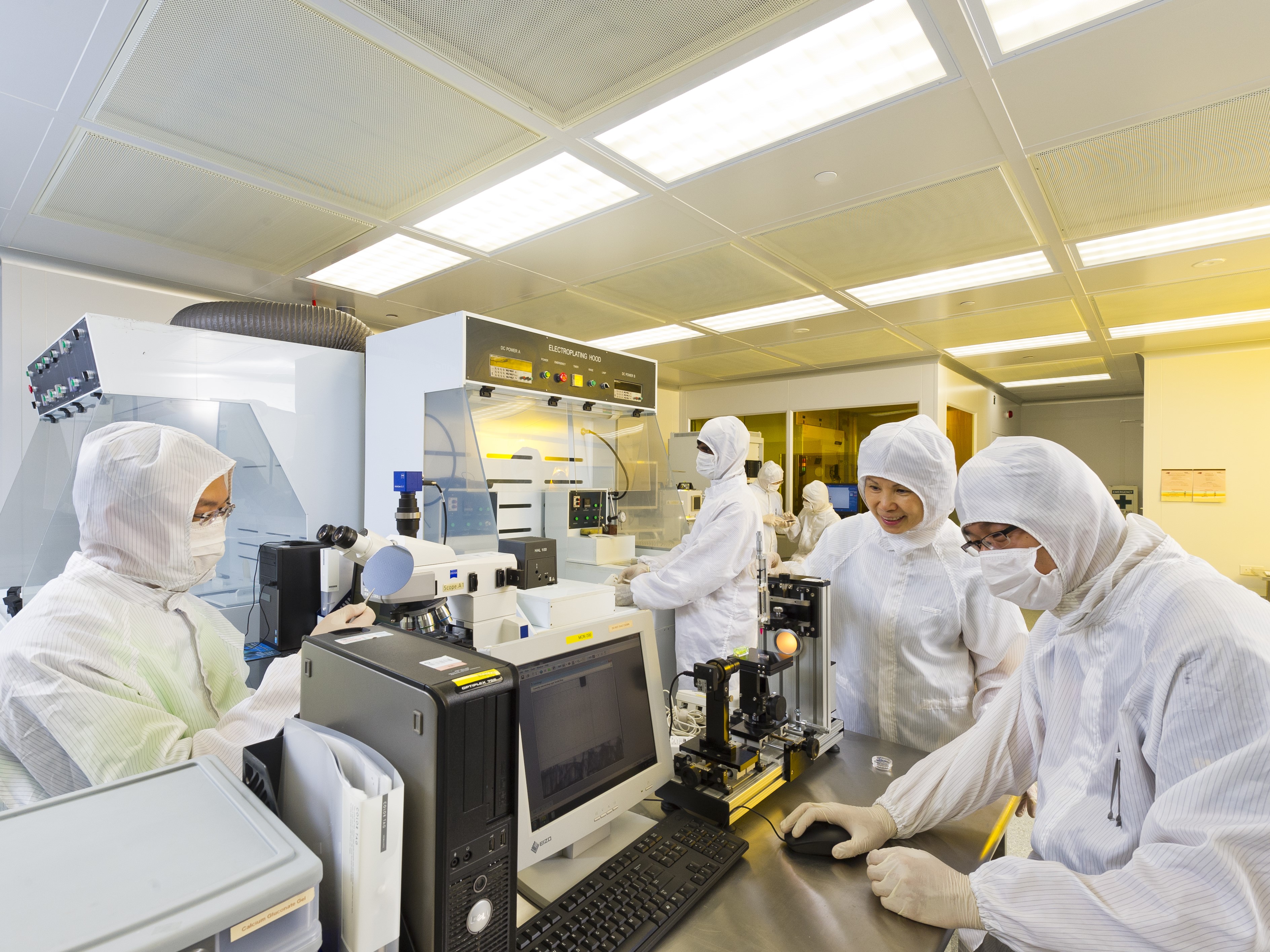
- State-of-the-Art Facilities: Over 5,048 sq. meters of lab space and access to industry-standard EDA software for IC design.
- Research Leadership: Home to the State Key Laboratory of Terahertz and Millimeter Waves, the first engineering-focused lab of its kind in Hong Kong, supported by the Ministry of Science and Technology.
- Holistic Development: Emphasis on co-curricular activities, including student tutoring, exchange programmes, internships, and career workshops.


