dse_subjects
score_weight
2
Position
- Any -

Integrative Bioscience & Bioengineering Programme (Bio3) (Features: Free Choice of Major / Overseas Research Opportunities / Interdisciplinary)#

College/School
Subtitle
綜合生物科學與生物工程課程 (特點: 自主選擇主修學科 / 海外頂尖院校研究機會 / 跨學科)
Thumbnail
Image
CBM Bio3
Academic Year of Entry
Admission Code

1300 (JS1300)

Indicative Intake Target

Local Places:

10 (For First-Year Entry; Tentative)*

Normal Duration of Programme
4 years
Admissions Tutor
Prof. Gigi LO
Remarks

* for JUPAS and non-JUPAS admissions

# Programme subject to the University's approval

Why Integrative Bioscience & Bioengineering Programme (Bio3)?

Explore, Innovate, and Connect: A Gateway to Biological Sciences, Biomedical Sciences, and Biomedical Engineering

Integrative Bioscience & Bioengineering Programme (Bio³) aims to provide exemplary students with a comprehensive and globally-oriented education in biomedicine and biomedical engineering. Building on the strengths of the Biological Sciences (BISI), Biomedical Sciences (BMS), and Biomedical Engineering (BME) programmes, Bio³ integrates enhanced overseas study experiences, research opportunities, and mentorship support. Students will benefit from the specialized curriculum in biomedicine and biomedical engineering, along with extensive training in global perspectives, innovative mindset, and research.

Key Features

1. Free Choice of Major

Students admitted to the Bio³ programme are free to choose their majors among (i) Biomedical Engineering [BME], (ii) Biological Sciences [BISI], (iii) Biomedical Sciences [BMS], upon offer acceptance. They will be enrolled in the major in their first year of study.

2. Overseas Research Internship

Students will have the unique opportunity to collaborate with eminent researchers in their specialized fields at a renowned international university. This hands-on experience in cutting-edge research will not only cultivate their skills in data analysis, experimental design, and scientific communication but also provide invaluable insights and mentorship for their academic and professional growth.

3. Overseas Exchange Study

Students will immerse themselves in a diverse academic environment at a prestigious international university. This experience will broaden their perspectives, enhance cultural awareness, and foster global connections. Engaging with new educational systems and peers from around the world, students will not only enrich their academic knowledge but also develop a deeper understanding of global issues and different perspectives.

4. Professional Mentorship

Students will participate in a mentorship programme that connects them with experienced professionals, offering guidance and industry insights to support their personal and professional development.

5. Flagship Scholarships (for Local Students)

Local students admitted to the Flagship Programme with outstanding academic performance shall be automatically considered for the Flagship Scholarships.

Entrance Requirements
JUPAS Applicants

JUPAS Entrance Requirements

JS1300 Integrative Bioscience & Bioengineering Programme (Bio3) (Features: Free Choice of Major / Overseas Research Opportunities / Interdisciplinary)
HKDSE SubjectMinimum Level Required
English LanguageLevel 3
Chinese LanguageLevel 3
MathematicsLevel 3
Citizenship and Social DevelopmentAttained
Elective 1Level 3 in Biology or Chemistry
Elective 2Level 3 in one elective subject from:
- Biology
- Business, Accounting and Financial Studies
- Chemistry
- Design and Applied Technology
- Information and Communication Technology
- M1/M2
- Physics
OR
- Attained with Distinction II in ApL 'Medical Laboratory Science'

Notes:  
- Besides Category A elective subjects, Mathematics extended modules (M1/M2) and “other languages” can also be used to meet the elective requirement. If students take both M1 and M2, they are counted as one subject only.  
- For details of the alternative Chinese Language qualifications acceptable by the University for Non-Chinese Speaking (NCS) students, please click here.

Direct / Non-JUPAS Applicants

Direct/ Non-JUPAS Applicants Entrance Requirements

To be considered for admission (programme code: 1300), you must satisfy the General Entrance Requirements and possess the International Baccalaureate (IB) Diploma or GCE A-level (or International A-level) qualifications.

Admissions Arrangements

Applicants to this programme will have a free choice of majors offered by the Department of Biomedical Engineering and the Department of Biomedical Sciences. The major options are:

  • BEng Biomedical Engineering (Bio3 stream)
  • BSc Biological Sciences (Bio3 stream)
  • BSc Biomedical Sciences (Bio3 stream)
Curriculum Structure

For details of the programme's curriculum structure, please visit the Undergraduate Catalogue.

What You Will be Studying

Integrative Bioscience & Bioengineering Programme (Bio3) is designed to equip students with a strong theoretical background and extensive practical experience. The programmes will offer you a solid foundation in the following areas.

BEng Biomedical Engineering (Bio3 stream):

  • Medical Technology
  • Bioinstrumentation
  • Cell and Tissue Engineering
  • Biomedical Robotics

BSc Biological Sciences (Bio3 stream):

  • Bioinformatics
  • Biochemistry
  • Genetics
  • Cellular & Molecular Biology
  • Immunology

BSc Biomedical Sciences (Bio3 stream):

  • Clinical Chemistry
  • Hematology
  • Medical Microbiology
  • Cellular Pathology
Start Your Career Here

BEng Biomedical Engineering (Bio3 stream):

  • Medical device industry
  • Engineering services in hospitals
  • Consultation for public health
  • Regulation and management in government departments and laboratories
  • Research and development in commercial and educational sectors
  • Postgraduate studies locally or overseas

BSc Biological Sciences (Bio3 stream) / BSc Biomedical Sciences (Bio3 stream):

  • Medical and health services
  • Research and development in the pharmaceutical and biotechnology industries
  • Laboratory management and consultancy
  • Government
  • Postgraduate studies locally or overseas
Flagship Programme

This is one of the CityUHK’s Flagship Programmes, which equip students with essential knowledge and skills, cultivate their global leadership abilities, and connect them with leading professionals. The Flagship Scholarships, which cover tuition and hall fees, a guaranteed berth, and a one-off exchange sponsorship of up to HK$500,000, will be awarded to local JUPAS talents who meet the criteria.

Programme Leaflet
Contact Type
Phone
Contact Value

+852 3442 8207

Contact Type
Email
Contact Value
Admission Year
Programe A-Z
author_college
Title (For sorting)
104
Minimum Entrance Requirement (Elective)
Programme Calculation Method
3 Core + 2 Elective Subjects
Non-JUPAS Year 1 Admission
Non-JUPAS Senior Year Admission
International Admission
Mainland Non-Gaokao Admission
Deadline applicable to all types of Admission
Historical Data
Interview Arrangement - Direct Yr1

Not Required

Interview Arrangement - JUPAS

Not Required

Late Application (Deadline applicable to all types)
Off
Late Application (International Admission)
Off
Late Application (Mainland Non-Gaokao Admission)
Off
Late Application (Non-JUPAS Senior Year Admission)
Off
Late Application (Non-JUPAS Year 1 Admission)
Off
Maths Core / M1 / M2 Calculation as one Subject
Off
Minimum Entrance Requirement (Core)
Historical Data Display
On
Reduce the font size?
On

BSc Environment and Sustainable Business (Features: Environmental Science / Business Sustainability / Environmental, Social & Governance (ESG))

Subtitle
理學士(環境及可持續發展商業) [特點:環境科學 / 商業可持續發展 / 環境、社會和管治]
Thumbnail
Image
SEE ESB Cover
Academic Year of Entry
Admission Code

1053 (JS1053)

Indicative Intake Target

Local Places:

30 (For First-Year Entry)*


Non-Local Places:

(All CityUHK programmes except Mainland Gaokao):

Around 500

Normal Duration of Programme
4 Years
Major Leader
Prof. Shauhrat CHOPRA
Remarks

* for JUPAS and non-JUPAS admissions

Why BSc in Environment and Sustainable Business?

The Bachelor of Science in Environment and Sustainable Business is a four-year undergraduate programme that is jointly offered by the School of Energy and Environment (SEE) and the College of Business (CB). The programme is designed to provide students with a comprehensive understanding of the principles and practices of sustainable business and Environmental, Social, and Governance (ESG), and their integration in the business world.

By the end of the programme, students will have a comprehensive understanding of sustainable business and ESG, and be able to apply their knowledge to real-world scenarios. They will also have a solid foundation in the science behind non-financial disclosures, and be familiar with the latest trends and technologies in sustainable energy and other fields in support of investment decision-making for sustainable finance.

The programme will be taught through a combination of lectures, case studies, and interactive discussions, and will feature experiential learning and industry connection via experts sharing (e.g., in guest lectures) from practitioners of leading organizations in Hong Kong. Students will have the opportunity to engage with real-world sustainable business/finance projects and develop practical skills in sustainability assessment, ESG integration, and impact investing. Students will also have a comprehensive understanding of sustainability in practice and ESG challenges and opportunities, and be prepared to pursue careers in this rapidly growing field.

The rationale for starting a new 4-year undergraduate programme in Environment and Sustainable Business is to meet the growing demand for professionals who can integrate ESG considerations into business, finance, and investment decisions. This demand is driven by the recognition that ESG factors are critical to long-term financial performance, and is reflected in the increasing popularity of sustainable investing and the growth of the sustainable finance industry. Hong Kong is well-positioned to take advantage of this growing demand, given its strategic location as a major financial hub and center for international trade and finance.

Entrance Requirements
JUPAS Applicants

JUPAS Entrance Requirements

JS1053 BSc Environment and Sustainable Business (Features: Environmental Science / Business Sustainability / Environmental, Social & Governance (ESG))
HKDSE SubjectMinimum Level Required
English LanguageLevel 3
Chinese LanguageLevel 3
MathematicsLevel 3
Citizenship and Social DevelopmentAttained
Elective 1Level 3 in one elective subject from: 
- Biology 
- Chemistry 
- Physics
Elective 2Level 3

Notes:  
- Besides Category A elective subjects, Mathematics extended modules (M1/M2) and “other languages” can also be used to meet the elective requirement. If students take both M1 and M2, they are counted as one subject only.  
- Applied Learning subjects are not counted as elective subjects.  
- For details of the alternative Chinese Language qualifications acceptable by the University for Non-Chinese Speaking (NCS) students, please click here.

Direct/Non-JUPAS Applicants

Direct/ Non-JUPAS Applicants Entrance Requirements

In addition to meeting the General Entrance Requirements as stipulated by the University, as a guide for applications, direct / non-JUPAS applicants are expected to have studied Mathematics and subjects related to Chemistry/Physics at a high school or post-secondary institution.

Curriculum Structure


For the full curriculum structure, please refer to the School website at the following link: 

Integrated Enrichment Programme

Integrated Enrichment Programme comprises a wide range of co-curricular activities and training that are tailored for SEE undergraduate students. Through the Programme, students will be exposed to not only summer programme and regular student exchange, but also industry-ready internship, professional training in leadership, presentation skills, business etiquette, business communication, and so on. The series of co-curricular activities organized by SEE every year aims to equip our students to be all-round professionals who possess skillsets highly sought after by the job market.

For details, please visit our page at:  
https://www.cityu.edu.hk/see/student-life-and-learning/integrated-enrichment-programme

SEE Corporate Video
SEE School Leaflet
SEE UG Programme Leaflet
Contact Type
Email
Contact Value
Admission Year
Programe A-Z
Description (For Search Result Only)

理學(環境及可持續發展商業)

Title (For sorting)
270
Programme Calculation Method
Best 5 Subjects
Non-JUPAS Year 1 Admission
Non-JUPAS Senior Year Admission
International Admission
Mainland Non-Gaokao Admission
Deadline applicable to all types of Admission
Included Subjects for calculation first
Included Subjects for calculation first (One of)
Historical Data
Interview Arrangement - Direct Yr1

Not Required

Interview Arrangement - JUPAS

On a selective basis  
- Early to mid-July 2026
- Group interview  
- English

Late Application (Deadline applicable to all types)
Off
Late Application (International Admission)
Off
Late Application (Mainland Non-Gaokao Admission)
Off
Late Application (Non-JUPAS Senior Year Admission)
Off
Late Application (Non-JUPAS Year 1 Admission)
Off
Maths Core / M1 / M2 Calculation as one Subject
Off
Minimum Entrance Requirement (Core)
Historical Data Display
On
Reduce the font size?
On
专业名称
1053 理学士(环境及可持续发展商业)
专业副标题
特点:环境科学 / 商业可持续发展 / 环境、社会和管治
指定选考科目
物理
文理科要求
理科

BEng Environmental Science and Engineering and BBA Finance (Double Degree; Features: Environmental, Social & Governance (ESG) / Green Finance / Environmental Technology / Interdisciplinary Education)

Subtitle
工學士(環境科學及工程學)與工商管理學士(金融)[雙學位;特點:環境、社會和管治 / 綠色金融 / 環保技術 / 跨學科教育)
Thumbnail
Image
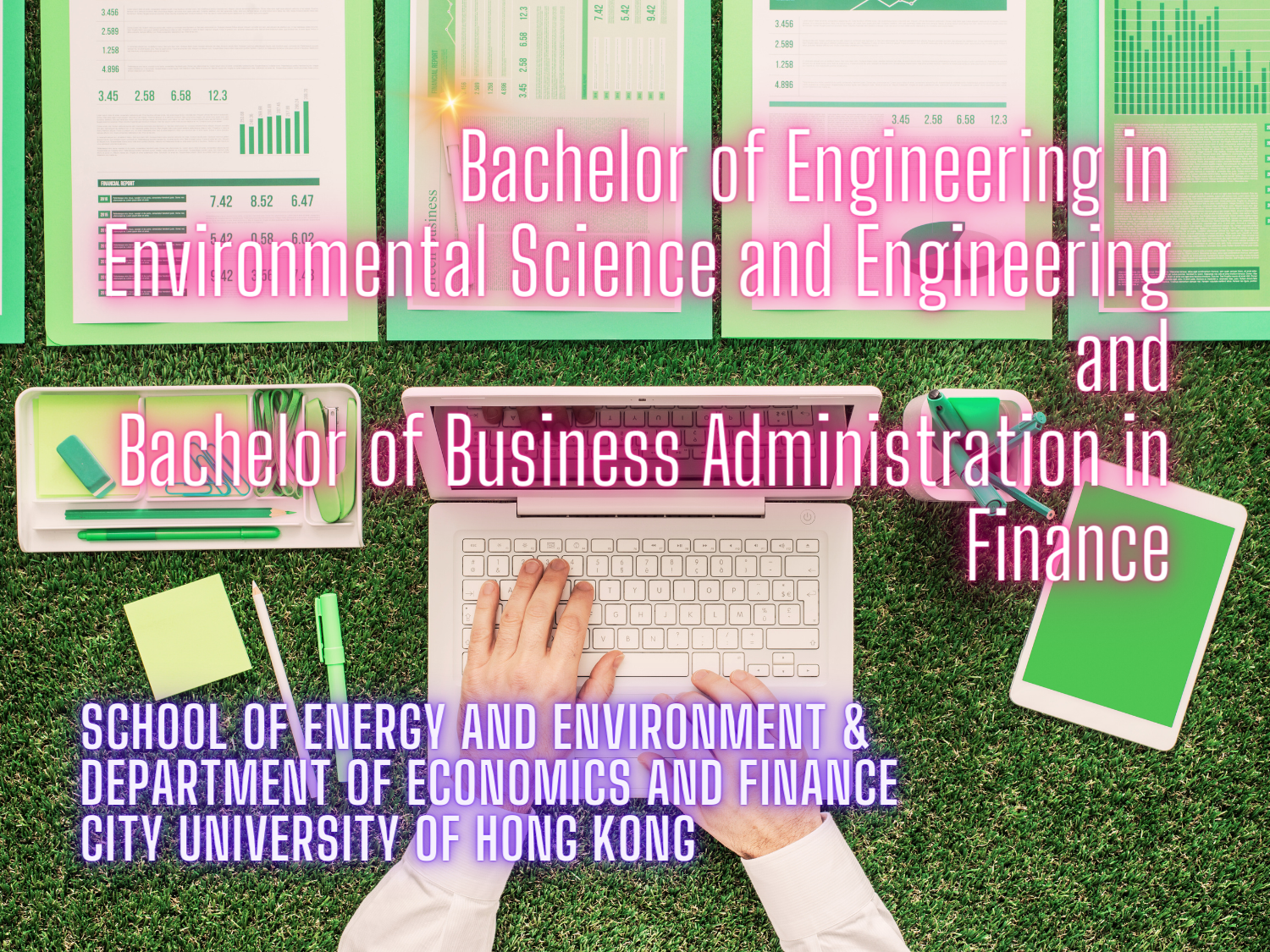
Double Degree Programme - Bachelor of Engineering in Environmental Science and Engineering and Bachelor of Business Administration in Finance
Academic Year of Entry
Admission Code

1052 (JS1052)

Indicative Intake Target

Local Places:

10 (For First-Year Entry)*

Non-Local Places  
(All CityUHK programmes except Mainland Gaokao):

Around 500

Normal Duration of Programme
5 Years
Programme Leader and Admissions Tutor
Prof. Jason LAM
Deputy Programme Leader and Deputy Admissions Tutor
Prof. Qianqian HUANG
Remarks

* for JUPAS and non-JUPAS admissions

Why BEng in Environmental Science and Engineering and BBA in Finance?

As the demand for professionals with expertise in environmental engineering, green finance, and Environment Social Governance (ESG) continues to rise, it has become increasingly apparent that there is a shortage of local financial professionals with expertise in ESG, as noted in the Chief Executive’s 2022 Policy Address.  Given Hong Kong’s strength as an international financial centre, it is imperative to further establish its status as a preferred ESG investment hub. Investors will likely shift their priority to companies with high ESG performance and commitment towards the carbon neutrality target. Moreover, areas like green finance and carbon emission trading are gaining importance in the financial field.

In response to the aforesaid developments, the School of Energy and Environment is proud to offer, in collaboration with the Department of Economics and Finance, a new double degree programme, the Bachelor of Engineering in Environmental Science and Engineering and Bachelor of Business Administration in Finance.

Through this double degree programme, students will receive a rigorous and comprehensive education in both environmental engineering and finance.  They will acquire the necessary skills and knowledge to address the challenges of sustainable finance, not just in Hong Kong but also in the global context.  By bridging the gap between these two fields, graduates of this programme will be well-prepared to tackle complex sustainability issues from a multidisciplinary perspective.

Entrance Requirements
JUPAS Applicants

JUPAS Entrance Requirements

JS1052 BEng Environmental Science and Engineering and BBA Finance (Double Degree; Features: Environmental, Social & Governance (ESG) / Green Finance / Environmental Technology / Interdisciplinary Education)
HKDSE SubjectMinimum Level Required
English LanguageLevel 3
Chinese LanguageLevel 3
MathematicsLevel 3
Citizenship and Social DevelopmentAttained
Elective 1Level 3 in one elective subject from: 
- Biology 
- Chemistry 
- Physics
Elective 2Level 3

Notes:  
- Besides Category A elective subjects, Mathematics extended modules (M1/M2) and “other languages” can also be used to meet the elective requirement. If students take both M1 and M2, they are counted as one subject only.  
- Applied Learning subjects are not counted as elective subjects.  
- For details of the alternative Chinese Language qualifications acceptable by the University for Non-Chinese Speaking (NCS) students, please click here.

Direct/Non-JUPAS Applicants

Direct/ Non-JUPAS Applicants Entrance Requirements

In addition to meeting the General Entrance Requirements as stipulated by the University, as a guide for applications, direct / non-JUPAS applicants are expected to have studied Mathematics and subjects related to Chemistry/Physics at a high school or post-secondary institution.

Curriculum Structure

The programme adopts an integrated curriculum combining the essence of the two degrees.  Students will enroll in courses primarily offered by SEE and EF to complete a minimum requirement of 153 credit units in five years.

For details, please refer to the page at the following link: 
https://www.cityu.edu.hk/see/programmes/undergraduate-programmes/BEngEVEBBAFIN 

What You Will Be Studying

The programme is designed to meet the unique needs of Hong Kong’s environmental and business landscape, and to prepare students for Environmental, Social, and Governance (ESG)-related careers in the region.  The programme objectives are:

  1. To provide students with a solid foundation in environmental engineering, economics, and finance, and to develop their knowledge and skills in climate change, social responsibility, and sustainable development;

  2. To equip students with the technical and analytical skills to assess environmental risks and opportunities, conduct ESG audits, and design and implement ESG strategies in various industries and sectors, such as energy, manufacturing, finance, and consulting;

  3. To develop students’ leadership and communication skills, enabling them to engage stakeholders and communicate effectively about sustainability issues, and to work collaboratively with multidisciplinary teams to achieve Carbon Neutrality goals;

  4. To foster students’ ethical and professional values, including integrity, transparency, and accountability, and to prepare them to address the complex ethical dilemmas and conflicts that arise in ESG-related work;

  5. To promote students’ global awareness and cultural competence, encouraging them to engage in international sustainable finance and environmental engineering initiatives and to work across borders and cultures to promote sustainability and social justice; and

  6. To prepare students for lifelong learning and professional development, providing them with the tools and resources to stay up-to-date with the latest ESG trends, innovations, and best practices, and to pursue further education or professional certifications as needed.

Integrated Enrichment Programme

Integrated Enrichment Programme comprises a wide range of co-curricular activities and training that are tailored for SEE undergraduate students. Through the Programme, students will be exposed to not only summer programme and regular student exchange, but also industry-ready internship, professional training in leadership, presentation skills, business etiquette, business communication, and so on. The series of co-curricular activities organized by SEE every year aims to equip our students to be all-round professionals who possess skillsets highly sought after by the job market.

For details, please visit our page at:  
https://www.cityu.edu.hk/see/student-life-and-learning/integrated-enrichment-programme

Start Your Career Here

Our graduates enjoy a wide range of career opportunities, including but not limited to, in various units such as government departments, NGOs, and private companies.

  • Carbon Neutrality and Management

  • Consultants in Engineering and Professional Firms (e.g., Big-4)

  • ESG Reporting for Compliance (Multinational Corporations and Listed Companies)

  • Green Finance and ESG Investing

  • In-house Sustainability Officers

  • Sustainability Taskforce of Government Departments

SEE Corporate Video
Programme Video
SEE School Leaflet
SEE UG Programme Leaflet
Contact Type
Email
Contact Value
Admission Year
Programe A-Z
Description (For Search Result Only)

工學士(環境科學及工程學)與工商管理學士(金融)[雙學位;特點:環境、社會和管治 / 綠色金融 / 環保技術 / 跨學科教育)

Title (For sorting)
273
Programme Calculation Method
Best 5 Subjects
Non-JUPAS Year 1 Admission
Non-JUPAS Senior Year Admission
International Admission
Mainland Non-Gaokao Admission
Deadline applicable to all types of Admission
Included Subjects for calculation first
Included Subjects for calculation first (One of)
Historical Data
Interview Arrangement - Direct Yr1

Not Required

Interview Arrangement - JUPAS

On a selective basis  
- Early to mid-July 2026
- Group interview  
- English

Late Application (Deadline applicable to all types)
Off
Late Application (International Admission)
Off
Late Application (Mainland Non-Gaokao Admission)
Off
Late Application (Non-JUPAS Senior Year Admission)
Off
Late Application (Non-JUPAS Year 1 Admission)
Off
Maths Core / M1 / M2 Calculation as one Subject
Off
Minimum Entrance Requirement (Core)
Historical Data Display
On
Reduce the font size?
On
专业名称
1052 工学士(环境科学及工程学)与工商管理学士(金融)
专业副标题
双学位;特点:环境、社会和管治 / 绿色金融 / 环保技术 / 跨学科教育
指定选考科目
物理
文理科要求
理科

BSocSc Social Work (Features: Social Engagement and Concern for People’s Health and Well-Being / Human Diversities and Sustainability / People-in-Environment Interventions)

Subtitle
社會科學學士(社會工作) (特點: 社會參與及人文關懷–健康與福祉 / 社會多元與持續 / 人在環境的專業介入)
Thumbnail
Image
JS1113_1303A_20250331
Academic Year of Entry
Admission Code

1113 (JS1113)

Indicative Intake Target

Local Places:

54 (For First-Year and Advanced Standing I Entries)*


Non-Local Places  
(All CityUHK programmes except Mainland Gaokao):

Around 500

Normal Duration of Programme
4 years
Major Leader
Prof. YEUNG Wai Keung Jerf
Remarks

* for JUPAS and non-JUPAS admissions

Why BSocSc Social Work?

The Bachelor of Social Sciences in Social Work (BSSSW) programme is a helping professional degree that is accredited by the Social Workers Registration Board (SWRB) to promote human and community well-being, with a commitment to upholding human dignity, social equality, and diversity. The programme aims to enable students to evaluate and align personal values with the value base of the social work profession, and acquire knowledge, skills, understanding, and practice competence in the profession. Throughout the course of study, students will receive a solid foundation of training in social sciences and social work related to their professional practice. Prior to integrating classroom learning into real-life practice through two fieldwork placements, students will undergo rigorous theoretical and laboratory training in the classroom. With elective courses concentrated on specific target groups and different working approaches, students can develop specializations in specific areas. To enable students with a breadth of knowledge to successfully navigate the challenges of the 21st century, they will also be exposed to multiple disciplines through gateway education (GE) and college-specified courses offered by the university. To cultivate students as ideal graduates who are globally-minded, critical and innovative, and civically-oriented with effective communication skills, this programme encourages students to work alongside faculty members in research and action learning projects, both locally and overseas.

Uniqueness of the programme
The programme integrates a liberal arts perspective to enrich students’ understanding of the person-in-environment context of professional practice, with a critical analysis and assessment of interpersonal, bio-psycho-social, cultural, and environmental factors. By explaining the use of comparative theories to work with individuals, families, groups, organizations, and communities and applying the knowledge and skills of generalist social work practice with systems of all sizes, students can become competent, reflective, and ethical social work practitioners, capable of carrying out well-prepared professional practice for diverse clients and social groups. Upon completing the BSSSW programme, students are qualified to become registered social workers. 

Entrance Requirements
JUPAS Applicants

JUPAS Entrance Requirements

JS1113 BSocSc Social Work
HKDSE SubjectMinimum Level Required
English LanguageLevel 3
Chinese LanguageLevel 3
MathematicsLevel 2
Citizenship and Social DevelopmentAttained
Elective 1Level 3
Elective 2Level 3

Notes:  
- Besides Category A elective subjects, Mathematics extended modules (M1/M2) and “other languages” (at grade E or above) can also be used to meet the elective requirement. If students take both M1 and M2, they are counted as one subject only.  
- Applied Learning subjects are not counted as elective subjects.  
- For details of the alternative Chinese Language qualifications acceptable by the University for Non-Chinese Speaking (NCS) students, please click here.


Admission Interview:

An admission interview is required for applicants to the Social Work major. Interview priority will be given to applicants who have exhibited promising performance in public examinations and/or extracurricular activities. Strong evidence of your personal qualities, community participation, and sustained involvement in extracurricular and co-curricular activities is desirable to support your application.

Direct / Non-JUPAS Applicants

Direct/Non-JUPAS Applicants Entrance Requirements

To be considered for admission, you must satisfy the General Entrance Requirements.

An admission interview is required for applicants to the Social Work major. Interview priority will be given to applicants who have exhibited promising performance in public examinations and/or extracurricular activities.  Strong evidence of your personal qualities, community participation and sustained involvement in extracurricular and co-curricular activities is desirable to support your application.

Curriculum Structure

During their first year, students will study a broad range of Gateway Education (GE), College core and Departmental requirement courses. 

For details of the programme’s curriculum structure, please visit the ‘Undergraduate Catalogue’.

What You Will Be Studying

This major enables students to evaluate and align their personal values with the value base of the social work profession, and to acquire knowledge, skills, understanding and competence in reflective professional practice. Upon successful completion of this major, students should be able to:

  • evaluate and align their personal values with the value base of the profession and its ethical standards and principles, and practice accordingly;
  • integrate the liberal arts perspective that enriches understanding of the person-in-environment context of professional practice with critical analysis and assessment of interpersonal, bio-psycho-social, cultural and environmental factors;
  • explain the use of comparative theories of working with individuals and families, groups, organizations and communities;
  • use communication skills differentially and creatively across client populations, colleagues and communities;
  • apply the knowledge and skills of generalist social work practice with systems of all sizes and integrate new ideas into practice;
  • demonstrate the skills to practice without discrimination, with respect and knowledge of clients’ characteristics, cultural beliefs and contexts;
  • apply critical thinking skills within the context of professional social work practice;
  • describe the forms and mechanisms of oppression and discrimination and apply advocacy and social change strategies that advance social and economic justice;
  • conduct research studies and evaluate and apply research findings to provide creative solutions to practice within the community, with an aim to engage in evidence-based practice; and
  • demonstrate knowledge, understanding and competence in practice through reflection to accomplish discovery and innovation in social work practice.

Based on its learning objectives, this major has the following main components:

  • College Core Courses
  • Social Work Core Courses
  • Social Work Elective Courses
  • Concurrent Practicum

Please refer to the Undergraduate Catalogue for further details on these courses.

Start Your Career Here

Upon graduation, you will have the competence to practice as a professionally qualified social worker in a variety of settings through which human services are delivered (e.g., social services agencies, schools, and health care institutions); work in the field of human resources (e.g., customer service and staff training); or pursue further studies in social work or related fields (e.g., psychology and education). You will also be eligible to apply for social work positions as a Registered Social Worker (RSW) in government and non-government organizations.

Professional Recognition

Graduates are qualified to register with the Social Workers Registration Board as Registered Social Workers (RSW).  The qualification is recognised by the majority of societies throughout the world.

Bonus Features
  • 10 full-time undergraduate social work students are awarded HKD 25,000 each under the HSBC Social Work Scholarship Scheme every year.
  • Students with outstanding academic performance can apply for non-local fieldwork placement at other countries/cities, such as United States, Canada, Australia, Singapore, etc.
  • Access to a rich array of co-curricular activities, such as student exchanges, summer internships, study tours, volunteer services and other whole person development activities, and the like.
  • Opportunities to work alongside teachers in research and action learning projects locally or overseas.
  • Minor studies in psychology, applied sociology and criminology are offered to students within the Department. Students are also welcome to declare minor studies in disciplines outside the Department.
Programme Video
Contact Type
Email
Contact Value
Admission Year
Programe A-Z
Title (For sorting)
525
Subject Weighting
Programme Calculation Method
Best 4 Subjects
Non-JUPAS Year 1 Admission
Non-JUPAS Senior Year Admission
International Admission
Mainland Non-Gaokao Admission
Deadline applicable to all types of Admission
Included Subjects for calculation first
Historical Data
Interview Arrangement - Direct Yr1

On a selective basis 
- February to early March 2026 
- Group interview (1 hour)
- English and Chinese

Interview Arrangement - JUPAS

On a selective basis 
- Late July to early August 2026 
- Group interview
- English and Chinese

Late Application (Deadline applicable to all types)
Off
Late Application (International Admission)
Off
Late Application (Mainland Non-Gaokao Admission)
Off
Late Application (Non-JUPAS Senior Year Admission)
Off
Late Application (Non-JUPAS Year 1 Admission)
Off
Maths Core / M1 / M2 Calculation as one Subject
Off
Minimum Entrance Requirement (Core)
Historical Data Display
On
Reduce the font size?
On

BSocSc Psychology (Streams: Health and Development / Mind and Brain)

Subtitle
社會科學學士(心理學) (專修: 健康與人類發展 / 大腦與認知)
Thumbnail
Image
1112_JBDP
Academic Year of Entry
Admission Code

1112 (JS1112)

Indicative Intake Target

Local Places:

26 (For First-Year and Advanced Standing I Entries; Tentative)*


Non-Local Places  
(All CityUHK programmes except Mainland Gaokao):

Around 500

Normal Duration of Programme
4 years
Programme Leader
Prof. LAI Chuk Ling Julian
Remarks

* for JUPAS and non-JUPAS admissions (quota is subject to approval)

Why BSocSc Psychology?

The Psychology major provides students with comprehensive training in psychology with an emphasis on experimental and research competencies, and prepares students for professional development in human service careers and advanced training in professional psychology and related fields.

Our programme provides:

  • Strong theoretical & scientific training in psychological studies to equip all graduates with essential skills and knowledge to conduct research and to apply learning to daily life
  • Individual research project in the final year to work with a faculty
  • Lab-based training in eye-tracking system, EEG system, tDCS and TMS system
  • Opportunities to work on empirical research under academic staff (e.g., voluntary research schemes)
  • Options for either stream of specialization in Health & Development or Mind & Brain   

Key Features

- Overseas Experience

Students will be provided with at least one semester overseas exchange, research attachment or internship in a prestigious university/organization. This experience is intended to equip psychology students with the expertise for establishing cross-cultural research skills and global professional networks, thus enhancing their competitiveness in further studies and in the international job market.

- Individualized Mentorship

Each student will also be provided with individualized mentorship where they will be paired with a faculty member to meet for academic advising in study, internship, and career plan. This individualized mentorship helps closely monitor student learning and progress in the BSSPSY programme.


After graduation, students are eligible: 

  • To apply for graduate membership of professional associations in Hong Kong Psychological Society (HKPS), British Psychological Society (BPS), and American Psychological Association (APA)
  • To pursue advanced training in Master’s or Doctoral level degrees in research & applied psychology, Clinical Psychology, Educational Psychology, Counselling Psychology, and Industrial & Organizational Psychology in local and overseas universities.
Entrance Requirements
JUPAS Applicants

JUPAS Entrance Requirements

JS1112 BSocSc Psychology
HKDSE SubjectMinimum Level Required
English LanguageLevel 3
Chinese LanguageLevel 3
MathematicsLevel 2
Citizenship and Social DevelopmentAttained
Elective 1Level 3
Elective 2Level 3

Notes:  
- Besides Category A elective subjects, Mathematics extended modules (M1/M2) and “other languages” (at grade E or above) can also be used to meet the elective requirement. If students take both M1 and M2, they are counted as one subject only.  
- Applied Learning subjects are not counted as elective subjects.  
- For details of the alternative Chinese Language qualifications acceptable by the University for Non-Chinese Speaking (NCS) students, please click here.

Direct / Non-JUPAS Applicants

Direct/Non-JUPAS Applicants Entrance Requirements

To be considered for admission, you must satisfy the General Entrance Requirements.

Curriculum Structure

During their first year, students will study a broad range of Gateway Education (GE), College core and Departmental requirement courses. 

For details of the programme’s curriculum structure, please visit the ‘Undergraduate Catalogue’.

What You Will Be Studying

Core Courses:

• Basic Psychology 
• Basic Psychology II 
• Research Methods for Behavioural Sciences 
• Developmental Psychology 
• Personality and Individual Differences 
• Design and Analysis for Psychological Research I and II 
• Biological Psychology 
• Cognitive Psychology 
• Learning and Behaviour 
• Social Psychology 
• Final-Year Research Project

Electives:

• Psychology of Interpersonal Relations 
• Psychological Testing
• Enhancing Cultural Competence in Overseas Study and Work
• Psychology of Childhood and Adolescence 
• Multivariate Analysis for Psychological Research 
• Cultural Psychology 
• Neuropsychology 
• Abnormal Psychology 
• Psychology of Ageing 
• Psychology of Language 
• Positive Psychology 
• Cognitive Neuroscience 
• Designing Experiments in Psychology 
• Supervised Independent Study and Research
• Counselling & Therapeutic Psychology 
• Introduction to Health Psychology 
• Introduction to Educational Psychology 
• Introduction to Industrial and Organizational Psychology 
• Psychology Internship

(Note: The list of elective courses offered may vary from year to year.)

Joint Bachelor's Degree Programme

BSocSc Psychology students are also eligible to apply for the Joint Bachelor’s Degree Program between City University of Hong Kong and Columbia University. Students study at CityUHK in year 1 and 2, and at Columbia University, New York, USA in year 3 and 4. Two bachelor’s degrees will be awarded, one awarded by CityUHK and one awarded by Columbia University. 

Start Your Career Here

Our graduates are particularly suited for people-oriented jobs, such as human resources, public relations, customer services, children and youth services, education and training, counselling and guidance, health-related services, family and community work, etc. Students are also well-prepared for jobs that require strong research skills and competence, critical analysis and communication abilities, such as scientific or applied research, research and development, project management and so on. Students who aspire to practice as professional psychologists will be able to pursue advanced education at the Master's or doctoral level in Hong Kong or overseas with training in pursuing scientific research or applied psychological training such as health, forensic, clinical, educational, counselling and occupational psychology.

Professional Recognition

Graduates who satisfy the requirements stipulated by the Hong Kong Psychological Society (HKPS) can apply for Graduate Membership of the Society (Note: Graduate Membership of the HKPS is normally regarded as an entrance requirement for advanced training in professional psychology).

Flagship Programme (subject to approval)

This is one of the CityUHK’s Flagship Programmes, which equip students with essential knowledge and skills, cultivate their global leadership abilities, and connect them with leading professionals. The Flagship Scholarships, which cover tuition and hall fees, a guaranteed berth, and a one-off exchange sponsorship of up to HK$500,000, will be awarded to local JUPAS and non-JUPAS talents who meet the criteria.


Direct Admission to Joint Bachelor’s Degree Programme with Columbia University

Starting in 2026/27, high school applicants can directly apply for Year 1 entry to the prestigious Joint Bachelor’s Degree Programme offered by CityUHK and Columbia University. Graduates will earn degrees from both institutions. For JUPAS applicants, a separate application to Columbia University is required after submitting the JUPAS application.

Programme Video
Contact Type
Email
Contact Value
Admission Year
Programe A-Z
Title (For sorting)
522
Subject Weighting
Programme Calculation Method
Best 4 Subjects
Non-JUPAS Year 1 Admission
Non-JUPAS Senior Year Admission
International Admission
Mainland Non-Gaokao Admission
Deadline applicable to all types of Admission
Included Subjects for calculation first
Historical Data
Interview Arrangement - Direct Yr1

Not required

Interview Arrangement - JUPAS

Not required

Late Application (Deadline applicable to all types)
Off
Late Application (International Admission)
Off
Late Application (Mainland Non-Gaokao Admission)
Off
Late Application (Non-JUPAS Senior Year Admission)
Off
Late Application (Non-JUPAS Year 1 Admission)
Off
Maths Core / M1 / M2 Calculation as one Subject
Off
Minimum Entrance Requirement (Core)
Historical Data Display
On
Reduce the font size?
Off

BSocSc Crime Science (Features: Crime Prevention / Security Practice / Global Policing / Crime Analytics / Cyber and Future Crimes)

Subtitle
社會科學學士 (犯罪科學) (特點: 犯罪預防 / 安保實務 / 全球警政 / 犯罪分析 / 科網與未來犯罪)
Thumbnail
Image
JS1111_20250331
Academic Year of Entry
Admission Code

1111 (JS1111)

Indicative Intake Target

Local Places:

21 (For First-Year and Advanced Standing I Entries)*


Non-Local Places  
(All CityUHK programmes except Mainland Gaokao):

Around 500

Normal Duration of Programme
4 years
Programme Leader
Prof. HO Wing Chung

Remarks

* The indicative quota has included JUPAS and non-JUPAS admissions. 

The programme title BSocSc Crime Science is applicable to students admitted to the first year programme (1111/JS1111) or Advanced Standing I (1359A) only. 

Why BSocSc Crime Science?

Crime Science is an interdisciplinary approach for developing practical solutions to real world crime problems. This programme aims to equip students with a comprehensive understanding of this approach, including the use of scientific theories, methods and strategies for preventing crime. With a specific focus on safeguarding the public and upholding Hong Kong's reputation as one of the safest cities globally, this programme offers students the opportunity to contribute to societal progress through innovative approaches. The programme considers the prevention of many forms of both small-scale and transnational organised criminal activity – ranging from residential burglaries to cybercrime. It is ideally suited for practical-minded students with a passion for discovery and a commitment to utilizing scientific analytical methods to benefit society and promote social development. 

This is the only UGC-funded undergraduate programme in Hong Kong to provide comprehensive training in the discipline of Crime Science.

Entrance Requirements
JUPAS Applicants

JUPAS Entrance Requirements

JS1111 BSocSc Crime Science
HKDSE SubjectMinimum Level Required
English LanguageLevel 3
Chinese LanguageLevel 3
MathematicsLevel 2
Citizenship and Social DevelopmentAttained
Elective 1Level 3
Elective 2Level 3

Notes:  

  • Besides Category A elective subjects, Mathematics extended modules (M1/M2) and “other languages” (at grade E or above) can also be used to meet the elective requirement. If students take both M1 and M2, they are counted as one subject only.  
  • Applied Learning subjects are not counted as elective subjects.  
  • For details of the alternative Chinese Language qualifications acceptable by the University for Non-Chinese Speaking (NCS) students, please click here.
Direct / Non-JUPAS Applicants

Direct/Non-JUPAS Applicants Entrance Requirements

To be considered for admission, you must satisfy the General Entrance Requirements.

Curriculum Structure

During their first year, students will study a broad range of Gateway Education (GE), College core and Departmental requirement courses.  

Curriculum structure of the normative 4-year degree:

Degree RequirementsNo. of Credit Units
Gateway Education Requirement31 credit units
College / School Requirement6 credit units
Major Requirement

Foundation-year courses: 9 credit units

Major core courses: 39 credit units

Elective courses: 9 credit units

Free Electives / Minor (if applicable)27 credit units
Minimum Number of Credit Units Required121 credit units


What You Will Be Studying

Upon successful completion of this programme, students should be able to:        

  • describe a range of key concepts, theories and professional values in Crime Science and understand how it differs from traditional criminology;
  • identify and critique the underlying assumptions of and devise interventions against criminal issues with a particular interest in different types of informal and formal problem-solving strategies in society;
  • apply qualitative and quantitative research methods and use different scientific perspectives for explaining crimes in society;
  • evaluate the applicability of crime-scientific theories in practice and develop innovative ideas for preventing crimes and creative ways of reducing re-offending in society with a focus on the local context;
  • evaluate the function and operation of social institutions and law enforcement agencies in the criminal justice system;
  • conduct scientific research independently; analyse the impacts of social, technological, and environmental changes on individuals and society; present research findings clearly and systematically to the public; and provide creative suggestions and/or solutions for preventing crimes in society; and
  • design programmes, generate alternatives, invent ideas, and construct cost-effective means for sustaining social order and safety.
Start Your Career Here

Students will have a broadened exposure to theories and analytical skills training in Crime Science – which specifically engages with devising practical approaches for solving real-world problems. This broad and practical knowledge base will strengthen the employability of graduates. Sample areas of employment for our graduates include positions in law enforcement agencies (e.g. Hong Kong Police Force, Correctional Services Department, Customs and Excise Department, Immigration Department, and Fire Services), schools and universities, non-governmental organisations, security or risk management departments in private companies, research institutes and marketing research firms, media industries, and public relations firms.

Programme Video
Contact Type
Email
Contact Value
Admission Year
Programe A-Z
Title (For sorting)
519
Subject Weighting
Programme Calculation Method
Best 4 Subjects
Non-JUPAS Year 1 Admission
Non-JUPAS Senior Year Admission
International Admission
Mainland Non-Gaokao Admission
Deadline applicable to all types of Admission
Included Subjects for calculation first
Historical Data
Interview Arrangement - Direct Yr1

Not required

Interview Arrangement - JUPAS

Not required

Late Application (Deadline applicable to all types)
Off
Late Application (International Admission)
Off
Late Application (Mainland Non-Gaokao Admission)
Off
Late Application (Non-JUPAS Senior Year Admission)
Off
Late Application (Non-JUPAS Year 1 Admission)
Off
Maths Core / M1 / M2 Calculation as one Subject
Off
Minimum Entrance Requirement (Core)
Historical Data Display
On
Reduce the font size?
On
专业名称
1111 社会科学学士 (犯罪科学)
专业副标题
特点: 犯罪预防 / 安保实务 / 全球警政 / 犯罪分析 / 科网与未来犯罪
指定选考科目
无科目要求
文理科要求
文理科皆可

BA Linguistics and Language Applications (Features: General Linguistics / Computational Linguistics / Corpus Linguistics / Experimental Linguistics / Language Technology and Applications)

Subtitle
文學士(語言學及語言應用) (特點: 普通語言學 / 計算語言學 / 語料庫語言學 / 實驗語言學 / 語言技術及應用)
Thumbnail
Image
1109_JBDP
Academic Year of Entry
Admission Code

1109 (JS1109)

Indicative Intake Target

Local Places:

25 (For First-Year and Advanced Standing I Entries)*


Non-Local Places 
(All CityUHK programmes except Mainland Gaokao):

Around 500

Normal Duration of Programme
4 years
Major Leader of BALLA
Prof. John S.Y. LEE

Associate Professor, Department of Linguistics and Translation

Admission Tutor of BALLA
Prof. Vanti W.S. LEE

Associate Professor, Department of Linguistics and Translation

For JUPAS and non-JUPAS admissions

Programme features subject to the University's approval

Why BA Linguistics and Language Applications (LLA)?

Language is a defining aspect of humanity, shaping how we communicate, think, and connect. The Major in Linguistics and Language Applications (BALLA) explores the science of language, from constructing sentences and words to understanding how our brains process language, how languages change over time, and how they reflect social and cultural identities. It also examines how adults, children, and even computers learn languages.

Studying linguistics offers practical applications with societal impact. Linguistics contribute to language education policies, address language-related social issues, develop AI-driven language technologies, and support those with speech or communication challenges. The Major in BALLA aims to educate students so that they will become language professionals who are familiar with linguistics and language-related applications. Along the way, students will develop an analytical, critical and creative mind and an open attitude towards people from different cultures. Students will also improve their communication and writing skills, making language learning more efficient and everyday interactions more effective.


Entrance Requirements
JUPAS Applicants

JUPAS Entrance Requirements

JS1109 BA Linguistics and Language Applications
HKDSE SubjectMinimum Level Required
English LanguageLevel 3
Chinese LanguageLevel 3
MathematicsLevel 2
Citizenship and Social DevelopmentAttained
Elective 1Level 3
Elective 2Level 3

Notes:  
- Besides Category A elective subjects, Mathematics extended modules (M1/M2) and “other languages” (at grade E or above) can also be used to meet the elective requirement. If students take both M1 and M2, they are counted as one subject only.  
- Applied Learning subjects are not counted as elective subjects.  
- For details of the alternative Chinese Language qualifications acceptable by the University for Non-Chinese Speaking (NCS) students, please click here.


Direct/Non-JUPAS Applicants

To be considered for admission, you must satisfy the General Entrance Requirements.

What You Will Be Studying?

There are two main subject areas: Linguistics and Language Applications.

  • Core courses in Linguistics include: Fundamentals of Linguistics, Introduction to Linguistic Research, Language in Society, Language and Mind, Phonetics, Phonology, Morphology and Syntax, and Semantics and Pragmatics.
  • Core courses in Language Applications include: Introduction to Language Technology, Computational Linguistics, and Project I.

At a more advanced level, students may choose from among courses such as Computational Lexicography, Computer-Assisted Language Learning, Conversation Analysis, Corpus Linguistics, Experimental Phonetics, First/Second Language Acquisition, Psycholinguistics, Sociolinguistics, and Project II.

Curriculum Structure

To find more details about the Programme Curriculum, please refer to the Programme Structure.

Bonus Features

1. Participating in internships and other co-curricular activities offered provides students valuable job experience in fields that require knowledge of languages, linguistics, and language applications.

2. Exchange programmes provide students with opportunities to gain experience of studying and living abroad for a semester, by paying the local tuition fees.

3. The Department of Linguistics and Translation (LT) offers two Joint Bachelor's Degree Programmes with National Taiwan University and Columbia University

  • Students can get 2 degrees by studying two years in LT and two years at a partner university. (For detailed information, please click this link.)

4. Students may opt for double majors within CityUHK and major plus minor programme or CityU Talents Programme (HK TECH Tiger).

Start Your Career Here

This major provides students with a solid foundation in the scientific study of human language. Students will be prepared for careers that require language expertise and language-related computing skills. In addition to opportunities in advanced studies, graduates will have employment prospects in education and research as well as in administrative and executive positions in various public and private sectors. They will have an important role to play in language and information service sectors of Hong Kong, Greater China, and the world. Moreover, this major is recognized by the Education Bureau as an English language major degree for the purpose of teaching in Hong Kong (To be confirmed by EDB).

Did You Know?

With the growing popularity of the web and apps as information resources and means of interaction, the field of language applications is advancing. Both of the academic institutions and industry partners work together to realise the growing potential of linguistically sophisticated applications.

Language professionals are needed not just for language teaching jobs at all levels, but also for vacancies in the private sector such as editors, technical writers, translators, reporters, journalists, anchor persons, PR personnel, etc.

According to the QS (Quacquarelli Symonds) World University Rankings by Subject (2025), Linguistics at City University of Hong Kong is ranked 38th in the world.

Student/Alumni Sharing

Student/Alumni sharing is available at https://lt.cityu.edu.hk/People/alumni/.

LT maintains very good ties with alumni via Facebook (CityUHK LT/CTL Alumni: https://www.facebook.com/groups/503342298012646) Whatsapp (CityUHK LT/CTL Alumni: https://chat.whatsapp.com/Fi8j52yJkTX0Ea1HgZGrGZ), and 2 Wechat groups (CityUHK LT_CTL Alumni; CityUHK LT_CTL Alumni 2). 

Several dozens of alumni have already expressed their sincere wish to help with our LT Senior Mentor Programme enthusiastically. This is a great opportunity for senior students or fresh graduates to communicate with their predecessors 校友學長 about some of the possible puzzles in job hunting, workplace etiquette, work attitude and job prospects, and further studies in various continents.

Direct Admission to Joint Bachelor’s Degree Programme with Columbia University

Starting in 2026/27, high school applicants can directly apply for Year 1 entry to the prestigious Joint Bachelor’s Degree Programme offered by CityUHK and Columbia University. Graduates will earn degrees from both institutions. For JUPAS applicants, a separate application to Columbia University is required after submitting the JUPAS application.

Programme Video
About our Alumni
Programme Brochure
Contact Type
Phone
Contact Value

+852 3442 8705

Contact Type
Fax
Contact Value

+852 3442 0359

Contact Type
Email
Contact Value
Admission Year
Programe A-Z
Title (For sorting)
516
Programme Calculation Method
3 Core + 2 Elective Subjects
Non-JUPAS Year 1 Admission
Non-JUPAS Senior Year Admission
International Admission
Mainland Non-Gaokao Admission
Deadline applicable to all types of Admission
Historical Data
Interview Arrangement - Direct Yr1

Not required

Interview Arrangement - JUPAS

Not required

Late Application (Deadline applicable to all types)
Off
Late Application (International Admission)
Off
Late Application (Mainland Non-Gaokao Admission)
Off
Late Application (Non-JUPAS Senior Year Admission)
Off
Late Application (Non-JUPAS Year 1 Admission)
Off
Maths Core / M1 / M2 Calculation as one Subject
Off
Minimum Entrance Requirement (Core)
Historical Data Display
On
Reduce the font size?
On
专业名称
1109 文学士(语言学及语言应用)
专业副标题
特点: 普通语言学 / 计算语言学 / 语料库语言学 / 实验语言学 / 语言技术及应用
指定选考科目
无科目要求
文理科要求
文理科皆可

BA Chinese and History (Streams: Chinese / History and Cultural Heritage)

Subtitle
文學士(中文及歷史) (專修: 中文 / 歷史及文化遺產)
Thumbnail
Image
programme default img
Academic Year of Entry
Admission Code

1103 (JS1103)

Indicative Intake Target

Local Places:

40 (For First Year and Advanced Standing I Entries)*


Non-Local Places  
(All CityUHK programmes except Mainland Gaokao):

Around 500

Normal Duration of Programme
4 years
Remarks

* for JUPAS and non-JUPAS admissions

Why BA Chinese and History?

Founded in 2014 with a view to establishing excellent tertiary education, world-class research and an international reputation in Hong Kong, the Department of Chinese and History offers the major in Chinese and History  with two streams – a) Chinese & b) History and Cultural Heritage. It aims to equip students with advanced and professional knowledge and a wide range of analytical and writing skills.

The Chinese Stream strives to provide students with a solid and comprehensive training in Chinese language, Chinese literature, history and philosophy. The knowledge is both ancient and modern, and can be widely used in daily life. The training equips students with both in-depth knowledge and research skills for further academic work as well as for career development in the education, public affairs, administration, literature studies, media, editing and creative industries involving the use of Chinese. The Chinese Stream consists of four specialized areas of study, which are (1) Chinese language and literature, (2) Classical and modern Chinese literature, (3) Chinese classics and philosophy, and (4) Language use and writing.

History and Cultural Heritage Stream equips the students with comprehensive and in-depth knowledge of history, particularly Chinese history knowledge.  It also aims to provide the students with the necessary training as cultural professionals with historical background. History seeks to provide the student knowledge on past events, memories, collections, and interpretations of the past. It also trains the students to examine the cause-and-effect relationships in human affairs and addresses the complexity of the past in shaping contemporary society. Although Chinese history is the primary focus of the stream, it also offers the students courses related to world history and public history to acquire historical knowledge to understand other nations’ different histories and cultures.

History as a discipline is in their very process to synthesize other fields of social sciences, including anthropology, sociology, and economics, not to mention cultural history, to which Cultural Heritage belongs. Without a relatively systematic knowledge of History, it is difficult for a student to master the knowledge of Cultural Heritage well. On the other hand, locating Cultural Heritage within and with History, Cultural Heritage can provide a cultural perspective for students of History in return.  This stream is designed based on these two inseparable and interactive parts of “History” and “Cultural Heritage”.

History and Cultural Heritage Stream provides the professional training necessary to nurture high caliber history-related professionals with cultural perspective and cultural professionals with historical knowledge. It meets the growing workforce needs resulting from the rapidly expanding capacity in history-related industries including education, libraries, publishing, mass-media, etc., and culture-and-heritage-related industries, including cultural tourism, museum management, exhibition industries, commercial galleries and archives, community heritage programs, entertainment and arts-related professions, cultural and creative industries, in the Greater Bay Area, particularly Hong Kong. It educates students to become historical and cultural professionals who are culturally literate and competent in managing and marketing culture and heritage, with extensive knowledge of Chinese history and Chinese cultural heritage, including knowledge of Hong Kong’s history and cultural heritage. It also educates the students to understand Hong Kong’s unique position in integrating the East and West cultures. For this goal, this stream also strives to educate the students to become cultural professionals with highly proficient English-language ability to promote one’s culture and heritage and understand and respect the historical and cultural differences of other nations. Last but not least, History and Cultural Heritage Stream promotes professionalism in History and Culture and Heritage in support of maintaining Hong Kong’s leading role in culture- and heritage-related professions and provides expert advice on the promotion of culture and the protection and preservation of heritage in the context of Hong Kong both as part of China and as an international city.

Students who choose to major in Chinese and History will enjoy the significant advantages of integrating the two streams and our interdisciplinary emphasis, and may go on to pursue a wide range of careers after graduation.

課程重視基礎知識及實用技巧的訓練。學生修畢第一年指定科目後,可按興趣與能力在第二年選讀一個專修:「中文」或「歷史及文化遺產」。各專修所涵蓋的課題廣泛,旨在拓展學生的跨文化視野,加強其批判思考及獨立研究的能力。「中文」專修透過分析文學、思想與語言的演變,深化學生對中國語文及社會文化的認識;「歷史及文化遺產」專修強調經世致用、著重對史料的掌握與應用,並教授有關文化理論、文物保護、博物館研究的知識。

Entrance Requirements
JUPAS Applicants

JUPAS Entrance Requirements

JS1103 BA Chinese and History
HKDSE SubjectMinimum Level Required
English LanguageLevel 3
Chinese LanguageLevel 3
MathematicsLevel 2
Citizenship and Social DevelopmentAttained
Elective 1Level 3
Elective 2Level 3

Notes:  
- Besides Category A elective subjects, Mathematics extended modules (M1/M2) and “other languages” (at grade E or above) can also be used to meet the elective requirement. If students take both M1 and M2, they are counted as one subject only.  
- Applied Learning subjects are not counted as elective subjects.  
- For details of the alternative Chinese Language qualifications acceptable by the University for Non-Chinese Speaking (NCS) students, please click here.

Direct/Non-JUPAS Applicants

To be considered for admission, you must satisfy the General Entrance Requirements.

As this is a programme focusing on Chinese, Chinese history, and cultural heritage of China, successful applicants are expected to be proficient in Chinese. Applicants should provide recognized qualifications to prove their proficiency in Chinese for the Department's consideration.

Curriculum Structure

During their first year of study, students will have to take a wide range of College-required courses, Gateway Education (GE) courses, and Foundation-year Courses under the major. They can also take courses in the streams so as to have a basic understanding of each discipline.  

To find more details about the Programme Curriculum, please refer to the Programme Structure

Department of Chinese and History
Student Exchange / Internship

For details on Student Exchange Programme, please click here.

For details on Professional Internship Programme, please click here

Programme Video
Programme Brochure
Contact Type
Phone
Contact Value

+852 3442 2054

Contact Type
Fax
Contact Value

+852 3442 0508

Contact Type
Email
Contact Value
Admission Year
Programe A-Z
Title (For sorting)
504
Programme Calculation Method
3 Core + 2 Elective Subjects
Non-JUPAS Year 1 Admission
Non-JUPAS Senior Year Admission
International Admission
Mainland Non-Gaokao Admission
Deadline applicable to all types of Admission
Historical Data
Interview Arrangement - Direct Yr1

Not required

Interview Arrangement - JUPAS

Not required

Late Application (Deadline applicable to all types)
Off
Late Application (International Admission)
Off
Late Application (Mainland Non-Gaokao Admission)
Off
Late Application (Non-JUPAS Senior Year Admission)
Off
Late Application (Non-JUPAS Year 1 Admission)
Off
Maths Core / M1 / M2 Calculation as one Subject
Off
Minimum Entrance Requirement (Core)
Historical Data Display
On
Reduce the font size?
Off
专业名称
1103 文学士(中文及历史)
专业副标题
专修: 中文 / 历史及文化遗产
指定选考科目
无科目要求
文理科要求
文理科皆可

Pathway for Research, Innovation, and Multinational Engineering (PRIME) (any major in College of Engineering + Overseas Experience / Interdisciplinary / Entrepreneurial Training)

College/School
Subtitle
研究、創新和環球工程課程 (特點: 工學院任何一個主修 + 海外經驗 / 跨學科 / 創業培訓)
Thumbnail
Image
Default image_flagship
Academic Year of Entry
Admission Code

1217 (JS1217)

Indicative Intake Target

Local Places:

15 (For First-Year Entry)*

Non-Local Places  
(All CityUHK programmes except Mainland Gaokao):

Around 500

Normal Duration of Programme
4 years
Remarks

* for JUPAS and non-JUPAS admissions

Why Pathway for Research, Innovation, and Multinational Engineering (PRIME)?

Pathway for Research, Innovation, and Multinational Engineering (PRIME) is the flagship Programme of the College of Engineering designed to provide exceptional students with a comprehensive education in engineering and opportunities to gain valuable experience through research internships and work placements in top universities and companies worldwide. It is intended to equip students with the skills and knowledge needed to excel in the field of engineering and to prepare them for successful careers in the global engineering industry. PRIME is open to talented and motivated students with a passion for engineering and a commitment to excellence.

Key features

Students accepted into the programme receive a range of benefits, including:

  • Free Choice of Major: Students admitted to PRIME are free to choose any major within the College of Engineering upon accepting the offer. They will be enrolled in one of the departments before starting their first year of study. 
     
  • One-on-One Mentorship: Each student will be paired with a faculty member who will provide personalised guidance and support throughout the programme. The faculty mentor will help the student identify their academic and professional goals, develop a plan to achieve them, and provide feedback and guidance along the way.
     
  • Overseas Experience in Year 3 or Year 4

    a) Research Internship: Selected students will have the opportunity to work with leading researchers at top overseas universities. This will provide students with hands-on experience in cutting-edge research and will help them develop essential skills in data analysis, experimental design, and scientific communication.

    b) Global Work Placement: Selected students may also have the opportunity to undertake placements with international companies in leading engineering and technology destinations around the world. These experiences enable students to apply their engineering skills in real-world settings, build global professional networks, strengthen communication skills, and gain invaluable industry exposure.

  • Interdisciplinary Final-year Project: Leveraging faculty members' diverse research expertise and state-of-the-art research facilities, students will receive support to conduct interdisciplinary research in their final-year projects, offering valuable experience for their future professional endeavours.
     
  • Guaranteed admission to CityUHK PhD programme#: This opportunity provides a clear pathway for students interested in furthering their academic and research careers.

             #Upon meeting the entrance requirements for PhD programme when the student graduates from PRIME.

Other features

With the mission to foster the career development of students and promote impactful innovations, students of the College of Engineering will also benefit from the following optional schemes.

  • Undergraduate plus Master's Degree Programmes: Students in an “Undergraduate plus Master's Degree Programme” will receive a conditional offer for a Master's degree programme when they join CityUHK as undergraduate students. They can benefit from advanced-level courses, such as those with research elements and normally taught at the Master's level, during their undergraduate study. On completion of their study at CityUHK, students will be awarded two degrees (Bachelor's degree + Master's degree).
     
  • Entrepreneurial Training: The College offers a Minor in Engineering Entrepreneurship, which aims to provide entrepreneurial training to help students develop the skills and knowledge needed to start and operate their engineering businesses. It also helps students broaden their multi-disciplinary perspectives, integrating management, marketing, finance, and engineering.
     
  • Global Challenges: CityUHK X Sino Grand Challenges Scholars Program (CityUHK X Sino GCSP) is a combined curricular and extracurricular element to prepare students to be the future engineers and scientists that address and solve the global challenges facing the world in this century. CityUHK X Sino GCSP would give students a sense of purpose and enable them to positively impact the world through their engineering work.
     
  • Cross-Cultural Competence: Through Student Exchange Programmes, study tours and the Cultural & Language Immersion Scheme (CALIS), students are provided with opportunities to develop cross-cultural competence through activities such as language training, cultural immersion experiences, or international service projects. This would help students to become global citizens and to develop the skills needed to work effectively in diverse and multicultural environments.
Flagship Scholarships to Local Students

Local students admitted to the Flagship Programmes with outstanding HKDSE/IB/GCE A-Level examination results shall be automatically considered for the Flagship Scholarships. The Flagship Scholarships include:

  • Tuition and hall fees incurred at CityUHK and are tenable for the normal duration of the programmes concerned
    • Full Scholarship: 100% tuition and hall fees (double room occupancy) 
    • Half Scholarship: 50% tuition and hall fees (double room occupancy)
  • Guaranteed berth in the Halls of Residence
  • A one-off special sponsorship of a maximum amount of HK$500,000 for an overseas exchange of up to one year at a top-ranked university

Please click here for details.
 

Admission Arrangements

Students admitted to PRIME are free to choose any of the following majors within the College of Engineering upon accepting the offer. 

DepartmentsMajors
Department of Architecture and Civil Engineering (ACE)
  • BEng Architectural Engineering
  • BEng Civil Engineering
  • BSc Architecture and Surveying
Department of Electrical Engineering (EE)
  • BEng Computer and Data Engineering
  • BEng Electronic and Electrical Engineering
  • BEng Information Engineering
  • BEng Microelectronics Engineering
Department of Materials Science and Engineering (MSE)
  • BEng Materials Science and Engineering
Department of Mechanical Engineering (MNE)
  • BEng Aerospace Engineering
  • BEng Mechanical Engineering
  • BEng Nuclear and Risk Engineering
Department of Systems Engineering (SYE)
  • BEng Innovation and Enterprise Engineering
  • BEng Intelligent Manufacturing Engineering

Students will be enrolled in one of the departments before starting their first year of study. 

  • For MSE and SYE, students will be enrolled in the major in Year 1. 
  • For ACE, EE and MNE, students will be admitted to the department in Year 1 and enrolled in their pre-selected major in subsequent years.

Entrance Requirements
JUPAS Applicants

JUPAS Entrance Requirements

JS1217 Pathway for Research, Innovation, and Multinational Engineering (PRIME) (any major in College of Engineering + Overseas Experience / Interdisciplinary / Entrepreneurial Training)
HKDSE SubjectMinimum Level Required
English LanguageLevel 3
Chinese LanguageLevel 3
MathematicsLevel 3
Citizenship and Social DevelopmentAttained
Elective SubjectsLevel 3 in two elective subjects from: 
- Biology 
- Chemistry 
- Design and Applied Technology 
- Information and Communication Technology 
- M1/M2 
- Physics

Notes:  
- Besides Category A elective subjects, Mathematics extended modules (M1/M2) can also be used to meet the elective requirement. If students take both M1 and M2, they are counted as one subject only.  
- Applied Learning subjects are not counted as elective subjects.  
- For details of the alternative Chinese Language qualifications acceptable by the University for Non-Chinese Speaking (NCS) students, please click here.

Direct/Non-JUPAS Applicants

Entrance Requirements for Direct/ Non-JUPAS Applicants

To be considered for admission, you must satisfy the General Entrance Requirements.

Student Exchange / Internship
Student Exchange Programme

Recognising the importance of nurturing students with a global perspective, the College encourages students to particpate in Student Exchange Programme. Students can study abroad at a partner university for a semester or a summer term. These international experiences not only broaden students’ horizons but also enhance their personal growth and career development. The College has an extensive network of exchange partners across the globe, including Austria, Belgium, Canada, Chile, Columbia, Czech Republic, Denmark, Finland, France, Germany, India, Italy, Japan, Korea, Macau, mainland China, Spain, Sweden, Taiwan, the Netherlands, the UK, and the US. 

Internships

The College operates the Co-op Education Centre with a mission is to work with industry, local and overseas, to provide co-operative education for students. The Centre aims to nurture a new generation of engineering professionals and industrial leaders with a global outlook who are capable of meeting the challenges in this fast-changing world. The Centre currently offers three major internship programmes for students:

Co-operative Education Scheme (CES)

Industrial Attachment Scheme (IAS)

Overseas Internship Scheme (OIS)

College of Engineering
Our Vision
  • World-leading College in major engineering disciplines
Our Mission
  • To foster career development of students
  • To promote impactful innovations
  • To gain industry and global recognition
Our Departments
Professional Recognition

The following undergraduate engineering programmes* of the College of Engineering are accredited by the Hong Kong Institution of Engineers (HKIE).

  • BEng Architectural Engineering
  • BEng Civil Engineering
  • BEng Computer and Data Engineering
  • BEng Electronic and Electrical Engineering
  • BEng Information Engineering
  • BEng Intelligent Manufacturing Engineering
  • BEng Materials Science and Engineering
  • BEng Mechanical Engineering
  • BEng Nuclear and Risk Engineering

    * Aerospace Engineering and Microelectronics Engineering will seek accreditation from the HKIE in late 2025.

The BSc in Architecture and Surveying programme will seek accreditation from the following professional bodies in 2026:

  • Architecture Stream
    • The Hong Kong Institute of Architects (HKIA) / Architects Registration Board (ARB)
  • Surveying and Urban Informatics Stream
    • The Royal Institution of Chartered Surveyors (RICS) in the form of partnership
    • The Hong Kong Institute of Surveyors (HKIS)

Flagship Programme

This is one of the CityUHK’s Flagship Programmes, which equip students with essential knowledge and skills, cultivate their global leadership abilities, and connect them with leading professionals. The Flagship Scholarships, which cover tuition and hall fees, a guaranteed berth, and a one-off exchange sponsorship of up to HK$500,000, will be awarded to local JUPAS talents who meet the criteria.

CityUHK College of Engineering
【城大工學院】 旗艦課程培育環球工程人才 造就未來領袖
【城大工學院】 工程畢業生出路廣 機遇處處
【城大工學院】 發揮創意 實現創業夢
JS1217 PRIME Programme Leaflet
CENG Programme Brochure
Contact Type
Phone
Contact Value

+852 3442 4133

Contact Type
Fax
Contact Value

+852 3442 0293

Contact Type
Email
Contact Value
Admission Year
Programe A-Z
author_college
Title (For sorting)
416
Minimum Entrance Requirement (Elective)
Programme Calculation Method
Best 5 Subjects
Non-JUPAS Year 1 Admission
Non-JUPAS Senior Year Admission
International Admission
Mainland Non-Gaokao Admission
Deadline applicable to all types of Admission
Included Subjects for calculation first
Historical Data
Interview Arrangement - Direct Yr1

When necessary

Interview Arrangement - JUPAS

When necessary

Late Application (Deadline applicable to all types)
Off
Late Application (International Admission)
Off
Late Application (Mainland Non-Gaokao Admission)
Off
Late Application (Non-JUPAS Senior Year Admission)
Off
Late Application (Non-JUPAS Year 1 Admission)
Off
Maths Core / M1 / M2 Calculation as one Subject
Off
Minimum Entrance Requirement (Core)
Historical Data Display
On
Reduce the font size?
On
专业名称
1217 研究、创新和环球工程课程
专业副标题
特点: 工学院任何一个主修 + 海外经验 / 跨学科 / 创业培训
指定选考科目
物理
文理科要求
理科

BEng Biomedical Engineering (Features: Medical Technology / Bioinstrumentation / Cell and Tissue Engineering / Biomedical Robotics)

College/School
Subtitle
工學士(生物醫學工程) (特點: 醫療技術 / 生物儀器 / 細胞和組織工程 / 醫療機器人)
Thumbnail
Image
programme default img
Academic Year of Entry
Admission Code

1211 (JS1211)

Indicative Intake Target

Local Places:

41 (For First-Year Entry; Tentative)*


Non-Local Places 
(All CityUHK programmes except Mainland Gaokao):

Around 500

Normal Duration of Programme
4 years
Admissions Tutor
Prof. Jiachen ZHANG
Deputy Admissions Tutor
Prof. Chung TIN
Remarks

* for JUPAS and non-JUPAS admissions

Department of Biomedical Engineering

The Department of Biomedical Engineering (BME) aims to provide world-class education and to conduct research in emerging fields of engineering. To achieve these aims, the Department adopts an interdisciplinary approach and includes subject areas that ensure our graduates are equipped to meet Hong Kong's current and future needs. The Department ranked 46th in the world in the subject of biomedical engineering in the Academic Ranking of World Universities in 2024.

The Department currently offers a major in Biomedical Engineering. The Department’s faculty members have interdisciplinary backgrounds with academic strengths in areas including (a) bioMEMS; (b) bioimaging; (c) flexible bioelectronics; (d) biomedical robotics; and (e) nanomedicine / biomaterials.

Please refer to the Department's website for more information about the BME Department.

生物醫學工程學系旨在提供世界級的跨學科課程和教育,以培養可綜合工程技術與生命科學從而促進人類健康的卓越人才。本學系在世界大學學術排名 (Academic Ranking of World Universities) 當中的生物醫學工程學科排名位於全球第46名。因應香港和世界各地日益增加的人才需求,本系畢業生能夠應用跨學科知識服務於多個領域,如醫療器械、醫學診斷與治療技術、醫藥開發、公共健康、食物安全、生物安全測量、以及各類與生物醫學工程技術有關的行業。學系課程按社會發展設計,包括5大範疇,分別是生物醫學微機電系統、生物醫學成像、柔性生物電子學、生物醫學機械人、以及納米醫學/生物材料學。

Why BEng Biomedical Engineering?

Healthcare is one of the fastest-developing fields. Air and chemical pollution in modern city, fast spreading of infectious diseases, cancer, aging-related obesity, diabetes, and Alzheimer disease, all impose enormous pressure threating our health and quality of life. However, because of many challenges ahead in this dynamic field, it requires a discipline which can integrate the knowledge of engineering and life sciences at the intersection for medical solutions and innovations.

Hong Kong government clearly identifies medical and testing/certification services being among the six industries which Hong Kong has clear advantages for further development. Considerable amount of job opportunities will be created locally and globally. Aligned with this, Biomedical Engineering will serve to educate the future professionals, ultimately positioning Hong Kong to become a major centre in the following areas:

  • New biomedical devices for diseases diagnosis, monitoring, surveillance, and therapeutic treatment
  • Food safety and bio-security
  • New drug discovery
Our Target

This major aims to pursue excellence in education, research and innovation through the fusion of engineering with life sciences for the advancement of human health. The objectives of the major are to provide integrative educational opportunities that allow students to learn passionately, think critically and independently and innovate creatively so that they are:

  1. able to apply their skills to a variety of challenges in their chosen field;
  2. equipped with the spirit of innovation, creativity, adaptability and critical thinking to solve problems in biomedical engineering-related professions;
  3. able to function effectively in multidisciplinary team environments and communicate with a variety of audiences;
  4. able to demonstrate competency in their chosen fields, and make decisions that are socially and ethically responsible; and
  5. able to build and expand upon their undergraduate foundations by engaging in learning opportunities throughout their careers.
Start Your Career Here

As a graduate, you will find career opportunities in the medical device industry, engineering services in hospitals, consultation for public health, regulation and management in government departments and laboratories, and research and development in the commercial and educational sectors. Alternatively, you might choose to pursue postgraduate studies locally or overseas. This major will provide you with the expertise required to meet the needs of increasing public concern and demands on medical diagnostics and therapeutic treatments, biomedical instruments, food safety and quality, advancement in pharmaceutical and health maintenance products, as well as an awareness of human health and wellness.

Entrance Requirements
JUPAS Applicants

JUPAS Entrance Requirements

JS1211 BEng Biomedical Engineering (Features: Medical Technology / Bioinstrumentation / Cell and Tissue Engineering / Biomedical Robotics)
HKDSE SubjectMinimum Level Required
English LanguageLevel 3
Chinese LanguageLevel 3
MathematicsLevel 2
Citizenship and Social DevelopmentAttained
Elective 1Level 3 in one elective subject from: 
- Biology 
- Chemistry 
- Physics
Elective 2Level 3

Notes:  
- Besides Category A elective subjects, Mathematics extended modules (M1/M2) and “other languages” can also be used to meet the elective requirement. If students take both M1 and M2, they are counted as one subject only.  
- Applied Learning subjects are not counted as elective subjects.  
- For details of the alternative Chinese Language qualifications acceptable by the University for Non-Chinese Speaking (NCS) students, please click here.

Direct/Non-JUPAS Applicants

Direct/ Non-JUPAS Applicants Entrance Requirements

To be considered for admission, you must satisfy the General Entrance Requirements. Applicants are also expected to have a science or engineering background.

Local applicants with HKDSE English Language below Level 3 are required to have a minimum TOEFL score of 550 (paper-based test) or 79 (Internet-based test), an IELTS overall band score of 6.5, or equivalent.

Curriculum Structure

For details of the programme’s curriculum structure, please visit the 'Undergraduate Catalogue'.

What You Will Be Studying

The curriculum has been categorised into four main areas:

Technical Foundation courses

Artificial Intelligence in Biomedical Engineering, Mathematics for Biomedical Engineering, Electrical Principles, Biological Thermofluids, Biomechanics, Materials for Biomedical Engineering, Electromagnetics, Engineering Graphics, Engineering Computing

Medical Devices and Systems

Medical Biotechnology in Imaging and Measurement, Biomedical Signals and Systems, Micro and Nanotechnology, Computational Biology and Bioinformatics, Biomedical Instrumentation, Bio-sensors and Bio-devices, Biomedical Systems and Control, Biomedical Devices for Digital Medicine

Cell and Molecular Engineering

Cellular and Biomolecular Engineering, Cell Transport and Signalling, Tissue Engineering, Regenerative Medicine, Gene Therapy

Health and Wellness Technology

Human Quantitative Physiology, Robotic Technology in Healthcare, Bio-safety and Risk Assessment, Technology for Drug Discovery, Radiotherapy Physics

Industrial Training and International Exchange

The University and the Department offer work placement opportunities through various internship schemes, which provide students with full-time job attachments not only in Hong Kong hospitals and firms, but also in those of the Pearl River Delta region and overseas. Through such placements, students will:

  • gain solid experience in real-world work environments;
  • develop problem-solving abilities and interpersonal skills;
  • learn the right attitudes towards work and professionalism; and
  • broaden their experience and enhance their employability.

Students in the department can also opt for technical final year projects offered by companies, under the joint supervision of a BME faculty member and a company mentor.

The University offers a number of credit-bearing exchange programmes for students with various partner institutions all around the world. Through these, students can broaden their educational horizons, gain language experience and enhance their awareness of different cultures.

Please visit CityUHK's website for details of outbound exchange programmes.

Professional Recognition

This major has been granted accreditation by the Hong Kong Institution of Engineers (HKIE), a signatory member of the Washington Accord under which all members agree to recognise each other’s accredited Engineering degree programmes.

Undergraduate plus Master's Degree Programme

Eligible students will be invited to apply for the “Undergraduate plus Master's Degree Programme” offered by the Department. Students in an “Undergraduate plus Master's Degree Programme” will receive a conditional offer for a Master's degree programme when they join CityUHK as undergraduate students. They can benefit from higher-level courses, including those with research elements and normally taught at the postgraduate level, during their undergraduate study. They will be awarded the Bachelor of Engineering in Biomedical Engineering (BEngBME) and Master of Science in Biomedical Engineering (MSBME) degrees upon completion of the programme.

Please visit CityUHK’s website and the Department’s website for details of the Programme.

Did You Know?

The world is currently suffering from the effects of the coronavirus disease 2019 (COVID-19) pandemic. Biomedical engineering is a major player in the fight against COVID-19, including the development of biomaterials for vaccines, devices for rapid tests, and image technology for diagnosis and treatment.

Over 400 million people in China, 31% of the population, will be over 60 years old by 2050 (www.chinadaily.com.cn). In addition, air and chemical pollution, threats to bio-security, obesity and the rapid spread of infectious diseases will continue to impose enormous pressures on the provision of trained professionals in the field of biomedical engineering.

The Hong Kong government has clearly identified medical and testing/certification services as among the six industries with clear advantages for further development. The Biomedical Engineering major will educate future professionals in these industries.

本課程旨在為香港及大中華地區培育生物醫學工程專業人才,畢業生將具備跨學科專業技術及國際視野,以應付人口老化及疾病對人類健康帶來的挑戰。

Interview Articles and Publications
CityUHK BOLD Magazine Issue No. 1
Education Media
Programme Video
生物醫學工程 多元出路 成就未來
年輕畢業生盼以所學造福人群
生物醫學工程學什麽?
生物醫學工程的應用:電子皮膚
醫院內的「解決專員」:生物醫學工程師
打針又關工程學的事!?
Programme Brochure
Contact Value
Admission Year
Programe A-Z
author_college
Title (For sorting)
101
Programme Calculation Method
Best 5 Subjects
Non-JUPAS Year 1 Admission
Non-JUPAS Senior Year Admission
International Admission
Mainland Non-Gaokao Admission
Deadline applicable to all types of Admission
Historical Data
Interview Arrangement - Direct Yr1

When necessary
- March to July 2026
- Individual interview
- English 

Interview Arrangement - JUPAS

When necessary

Late Application (Deadline applicable to all types)
Off
Late Application (International Admission)
Off
Late Application (Mainland Non-Gaokao Admission)
Off
Late Application (Non-JUPAS Senior Year Admission)
Off
Late Application (Non-JUPAS Year 1 Admission)
Off
Maths Core / M1 / M2 Calculation as one Subject
On
Minimum Entrance Requirement (Core)
Historical Data Display
On
Reduce the font size?
On
专业名称
1211 工学士(生物医学工程)
专业副标题
特点: 医疗技术 / 生物仪器 / 细胞和组织工程 / 医疗机器人
指定选考科目
物理、化学、生命科学/生物其中两科
文理科要求
理科